
Q2 2026 - Linde
Margin progression's stalled, including and excluding US home care challenges

Last Friday, Linde came out with rather disappointing Q2 results, showing margin contraction excluding the effects of cost pass-through. It was a rather unusual quarter for the leading industrial gases player. Relative to peers (Air Liquide and Air Products), performance ex. FX has also decelerated.
In his opening remarks, CEO Lamba said:
While these results (referring to the growth in secured backlog) demonstrate the strength of our core business and the future growth prospects, we are not satisfied with our margin performance for this quarter.
CFO White later added:
How we perform is what matters most. We know our owners expect more and the organization is committed to delivering on those expectations.
Air Products, which we’ve long criticized for its CAPEX spending concentrated on a few substantial projects, working capital volatility, and rising debt levels, has shown improvements under the stewardship of a former Linde executive, Mr. Menezes. It’s focused on rightsizing the balance sheet, and getting rid of low-IRR projects.
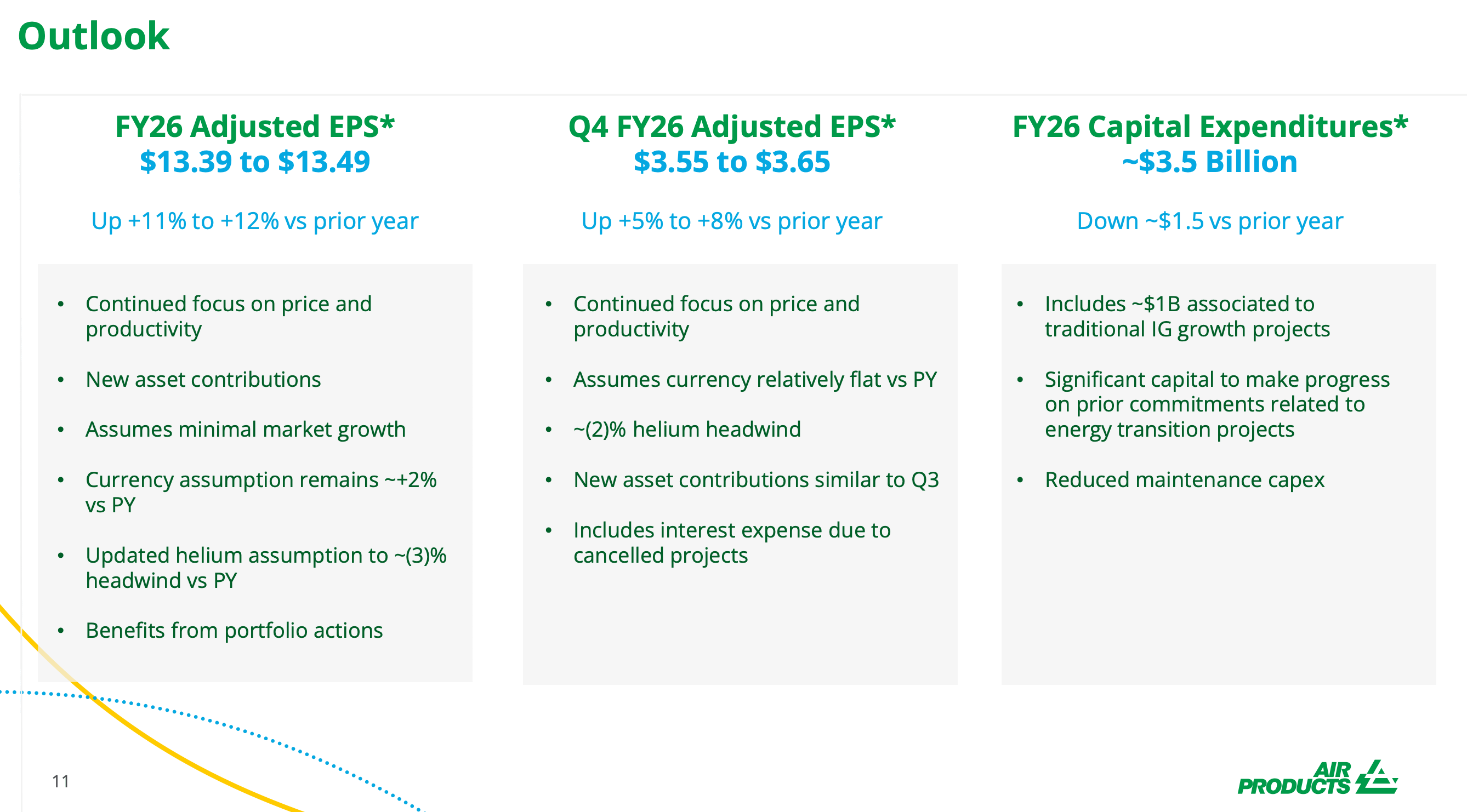
One of the appeals in the Linde investment case is/was the combination of better growth at industry-leading ROIICs, relatively low CAPEX needs to drive base volume growth, and a fairly un-levered balance sheet.
As peers have started to close the gap on growth and incremental returns, Linde’s lost some of its touch, meaning there’s more for investors to choose from. It’s the same why we prefer Constellation Software (and the whole CSI family for that matter) over Roper Technologies: a massive ROIIC gap and different capital allocation priorities.
Last quarter, we indicated what we expect from Linde - returning to double-digit growth in NOPAT per share.
In the past, you’ve heard us say that we require every position to contribute to our portfolio-weighted low-teens percent shareholder IRR. As we don’t invest for dividend income and do not waste our time on predicting a short-term rerating in valuation, long-term growth in earnings is the most critical factor in achieving a 12-ish percent IRR. Growth isn’t static: there are nuances on slower growth as a result of strategic growth investments that depress near-term profitability, and more often than not, the market will freak out about these blips.
For Linde, the post-COVID (since 2023) growth rates have been slower than what we and the management team had expected, partly driven by pricing headwinds for helium over the recent years and the sluggish industrial production growth (in fact, a global recession). Furthermore, there are puts and takes on the sales and profitability mix due to varying performance in its Engineering segment.
Over the longer term, management’s indicated that a range of 8-12% annual EPS growth without help from the macro (base volume growth) is doable, and we’ve now been at the lower end of the range. However, it’s also vastly outperformed during and just after COVID, when leveraging the industrial recovery created an unprecedented tailwind to its profitability (and margins haven’t fallen back since).
Thanks to some recent self-help initiatives, Linde projects accelerating constant-FX growth throughout FY26. It’s critical to get back to 8-ish percent EBIT growth, with a 2-3% contribution from buybacks on top. If not, then it’d become increasingly difficult to defend today’s premium valuation. That’s true for every business we own: we expect a minimum multiple to be sustained through growth and ROIIC (and balance sheet strength).
So, let’s take a closer look at Linde’s Q2 performance, outlook, and updated valuation model.
As communicated with our paid subscribers, over the past month, we’ve cut back on our Linde position entirely - locking in an above-average IRR, thanks to tripling our allocation at the end of last year (a very well-time decision).