

Yesterday, after the market close, CSI reported its Q2 and 1H results. As ever, headline figures need context, and the M&A deployment includes the spin-out companies in which CSI does not have a 100% economic stake. Excluding the spin-out transactions (Topicus.com BV and WideOrbit), as well as Altera, Q2 2026 marked the highest-ever capital deployment quarter for CSI standalone.
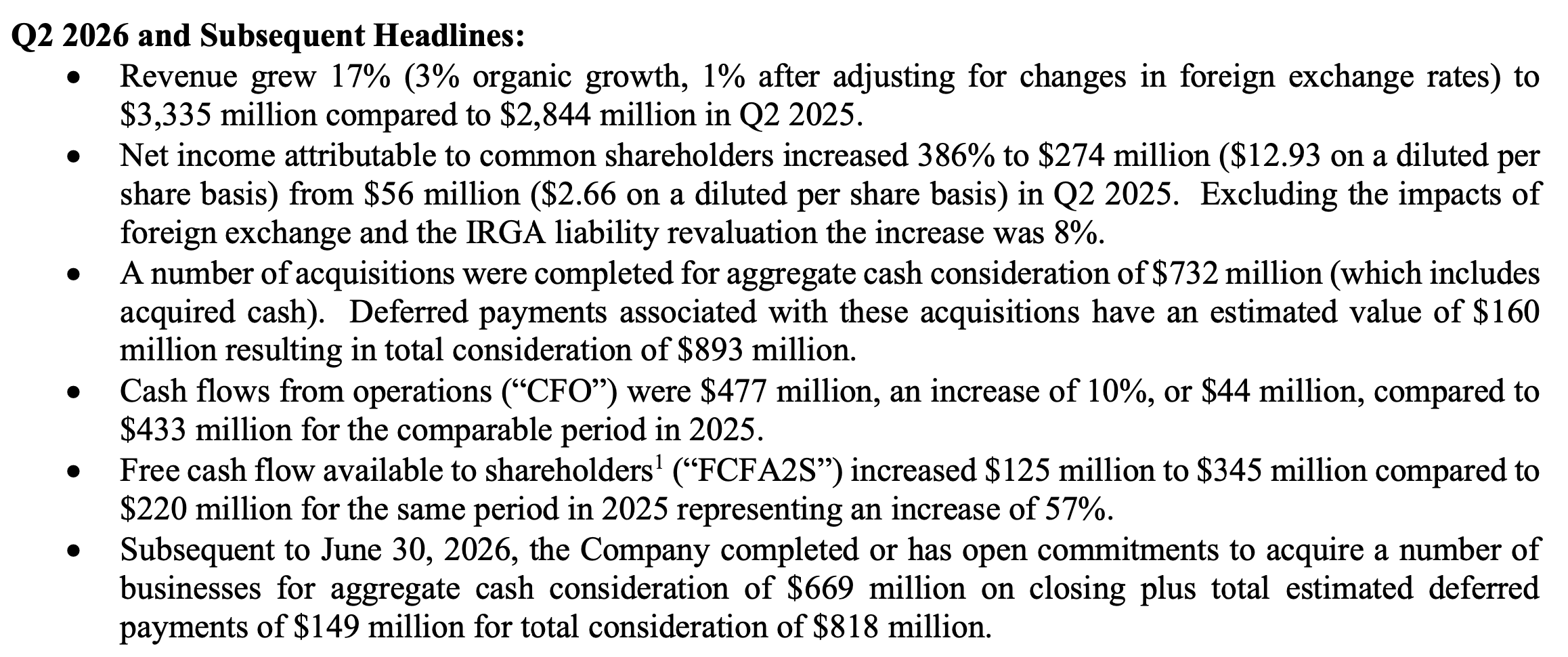
Looking at the organic growth, it came down because of contract awards and amendement for Altera in the same period last year (17 million USD impact). This is in line with the IFRS requirements but management did not mention the positive revenue impact in the MD&A last year. Hence, it now came as a surprise to the market. Despite the soft organic revenue growth, the thesis is running ahead of expectations. However, this is from an IRR perspective, which we’ll come back to at the end of this recap. Going forward, the company’s still expected to be a net drag on organic growth.
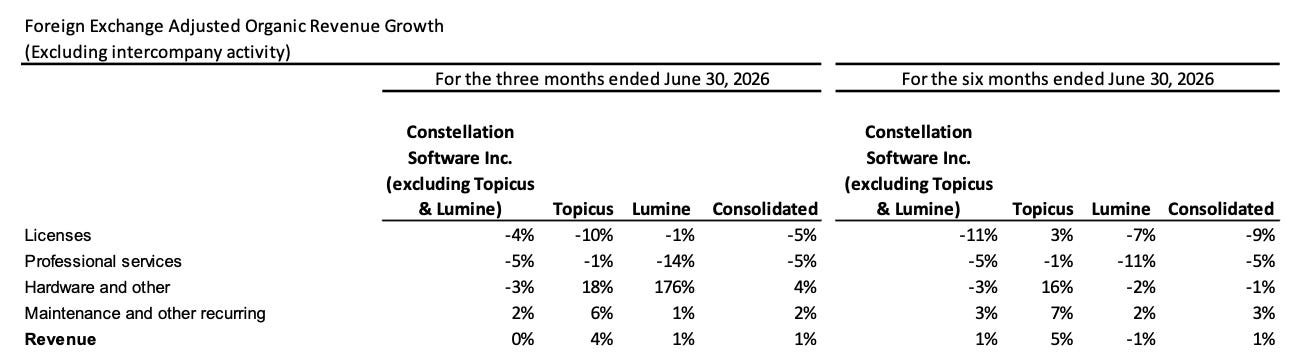
The Altera drag on organic maintenance revenue growth was about 110 bps, thus not fully explaining the step-down from 4% to 2% but keep in mind there’s some rounding here - like 3.55% organic growth coming down to 2.45%. On the call, CFO Baksh referred to some specific cases where the timing of acquisitions and an unusually strong organic growth for them in 2025. The thing to keep in mind for serial acquirers is that they consist of many entities: there’s bound to be accounting noise on revenue recognition, expense matching, valuing work-in-progress…
Low-Teens Percent EBITA Growth
Similar to the Q1 call, Mark Miller commented that AI’s primarily impacted the development cycle. It’s easier to develop products now but selling them remains the critical thing.
Customers are asking CSI companies to do more for them but jury’s out on how the IRRs on those incremental investments will look like. Running the decentralized playbook, CSI’s management trusts its local BU managers will make the right decisions - they know their verticals best.
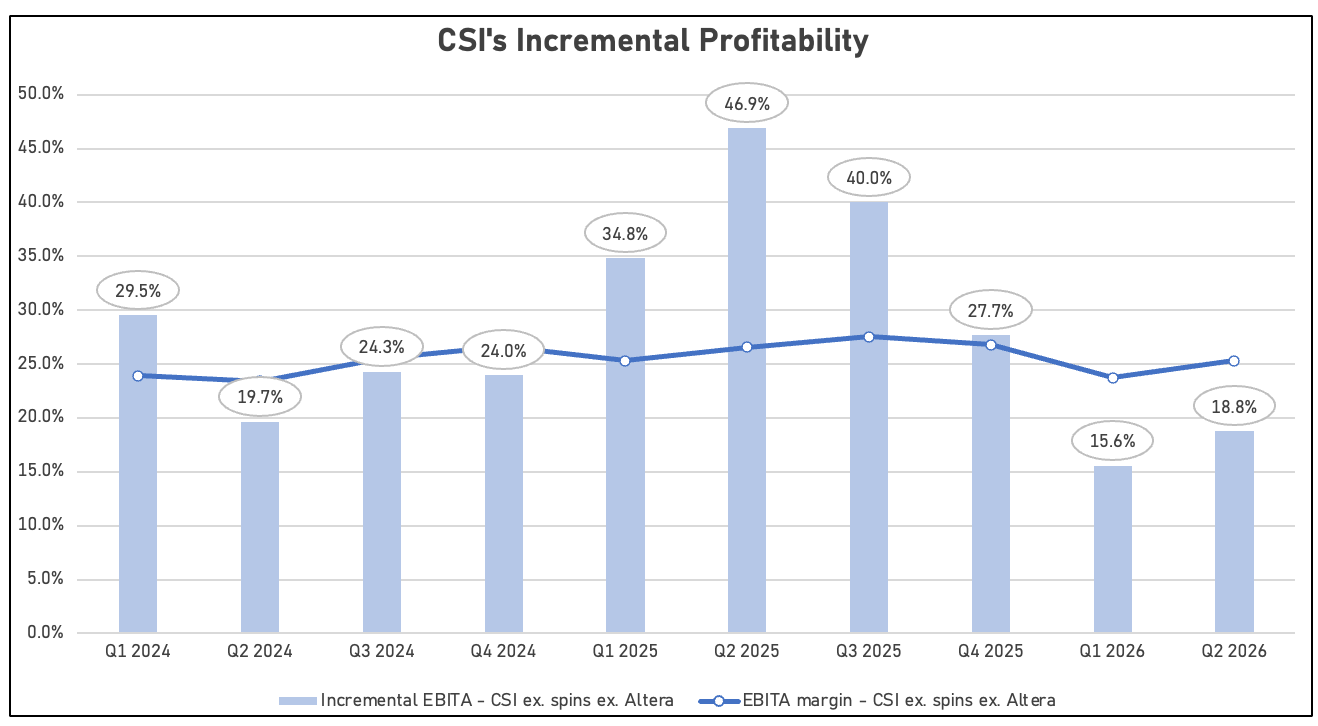
To us, seeing the incremental margins trend below the Group’s average is a combination of: a) the timing of M&A (large deals) and b) some of those incremental investments showing up with a delayed (or maybe no) payback at all. It’s naturally taking time for both to improve their respective profitability.
A recent trend has been on more verticalization/grouping of individual business but that’s not a dramatic strategy change. Rather, the goal is to support businesses that work more closely with each other, and increase the odds of completing more M&A. Still according to the decentralized playbook.